Chapter Nine — What Ruth Had Sacrificed
The younger woman lowered the letter.
“Why didn’t you come after us?”
Ruth leaned against the table.
“Because she asked me not to.”
“That answer isn’t enough anymore.”
“No.”
Ruth looked toward the open doorway.
The last light of sunset stretched across the floor.
“I wanted to.”
The younger woman waited.
“For years,” Ruth continued, “I imagined arriving at your door and telling you everything. I imagined your mother being angry. I imagined you asking why you had never met me.”
“Then why didn’t you?”
“Because she was afraid your father would find you through me.”
The younger woman’s expression tightened.
“He knew where we lived.”
“Not always.”
Ruth explained that there had been periods when the letters stopped arriving.
Addresses changed.
Names were shortened.
Information became vague.
Their correspondence had never been regular because regularity created a trail.
“Was he dangerous?”
Ruth shook her head.
“Not in the way you mean.”
“Then why hide?”
“Because not every dangerous man carries a weapon.”
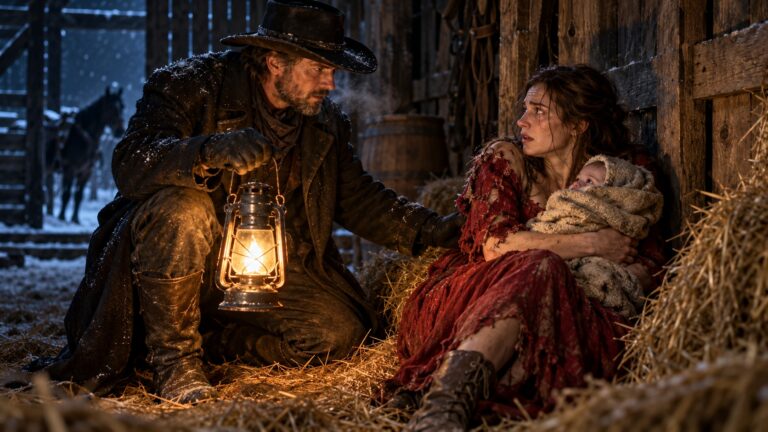
Silas looked toward Ruth.
The younger woman understood.
Her father had influence.
Money.
The ability to turn documents into leverage.
The cabin had not been worth much then, but land around the valley had begun to attract buyers.
Ruth had protected the title.
Her mother had protected the child.
And both women had protected each other through silence.
The younger woman looked at the old letters.
Suddenly they no longer seemed like proof of betrayal.
They were evidence of a relationship maintained under terrible conditions.
She sat down slowly.
“I hated her for this place.”
Ruth’s face softened.
“She knew.”
“What?”
“She knew you might.”
The younger woman looked up.
“She wrote once that children eventually create explanations for every silence their parents leave behind.”
The younger woman’s eyes filled.
Ruth continued.
“She said the tragedy was that children usually blame either themselves or the person who stayed away.”
The words remained between them.
Neither woman moved.
Finally, the younger woman asked, “Did she blame you?”
Ruth shook her head.
“No.”
“Did you blame her?”
“For a while.”
“And afterward?”
Ruth looked at the matching charm around her wrist.
“Afterward, I missed her.”
The younger woman covered her mouth briefly.
Silas turned his gaze toward the door.
Some grief deserved privacy.
After a while, the younger woman stood.
She walked toward Ruth.
Not close enough to embrace her.
But much closer than before.
“I don’t know what you are to me yet.”
Ruth nodded.
“That is fair.”
“You are my aunt.”
“Yes.”
“I should have known you.”
“Yes.”
“And I am still angry.”
“You should be.”
The younger woman looked at her carefully.
Then, for the first time, Ruth allowed herself to cry.
Quietly.
Without turning away.