Chapter One – The Hour When Houses Stop Pretending
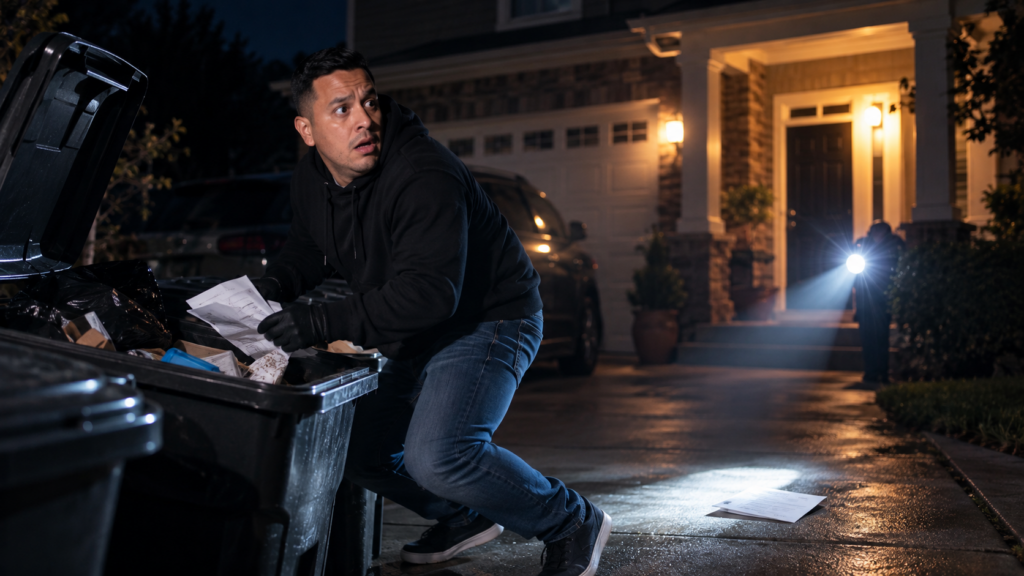
By half past eleven, the street had become so quiet that every ordinary sound seemed guilty of something. The detached houses stood behind clipped hedges and narrow driveways, their windows dark except for the occasional blue pulse of a television or the small amber lamp that someone had forgotten to switch off before bed. A parked car cooled beneath the weak garage light, and two black rubbish bins waited near the curb with their lids half closed, appearing no more remarkable than any other household objects abandoned to the night.
The man in the black hoodie had been watching the house for seventeen minutes before he crossed the pavement.
He was in his late twenties, with short dark hair, a medium build, and the kind of face people rarely remembered correctly afterward. Nothing about him suggested panic at first. His blue jeans were clean enough to belong to someone returning from an ordinary evening out, and his dark trainers with white soles made little sound against the concrete driveway. Only his hands betrayed him. They remained too close to his body, fingers tightening and loosening as though they had forgotten what to do when they were not holding something.
He stopped beside the bins and listened.
Nothing.
No curtain moved.
No door opened.
No dog barked from a neighbouring garden.
That silence should have reassured him, but instead it made the blood beat harder in his ears.
He lifted the first lid.
A smell of coffee grounds, cardboard and damp food rose into the cold air, painfully domestic and almost insulting in its normality. For a moment he merely stared down into the darkness, his face caught between the distant garage lamp and the harder white beam of the flashlight behind him.
Then he began to search.
He did not move like a thief looking for something valuable.
He moved like a man trying to recover something that should never have been thrown away.
Plastic rustled beneath his hands. Newspapers shifted. An empty envelope slid against the side of the bin. He pushed past packaging, a torn shopping bag and a bundle of discarded mail until his fingers touched paper.
His breathing stopped.
There it was.
Folded once.
Creased down the middle.
A small object among rubbish, yet he looked at it as though the whole street had narrowed around it.
For three nights he had told himself that he would not come here.
For three nights he had failed to believe himself.
He drew the paper out.
And somewhere behind him, from the darkness beyond the flashlight beam, a voice shouted.
“Hey!”
The word cracked through the night.
The man flinched as though struck.
The paper slipped from his fingers.
It floated once, pale beneath the light, then landed on the concrete beside the open bin.
He turned sharply.
And ran.